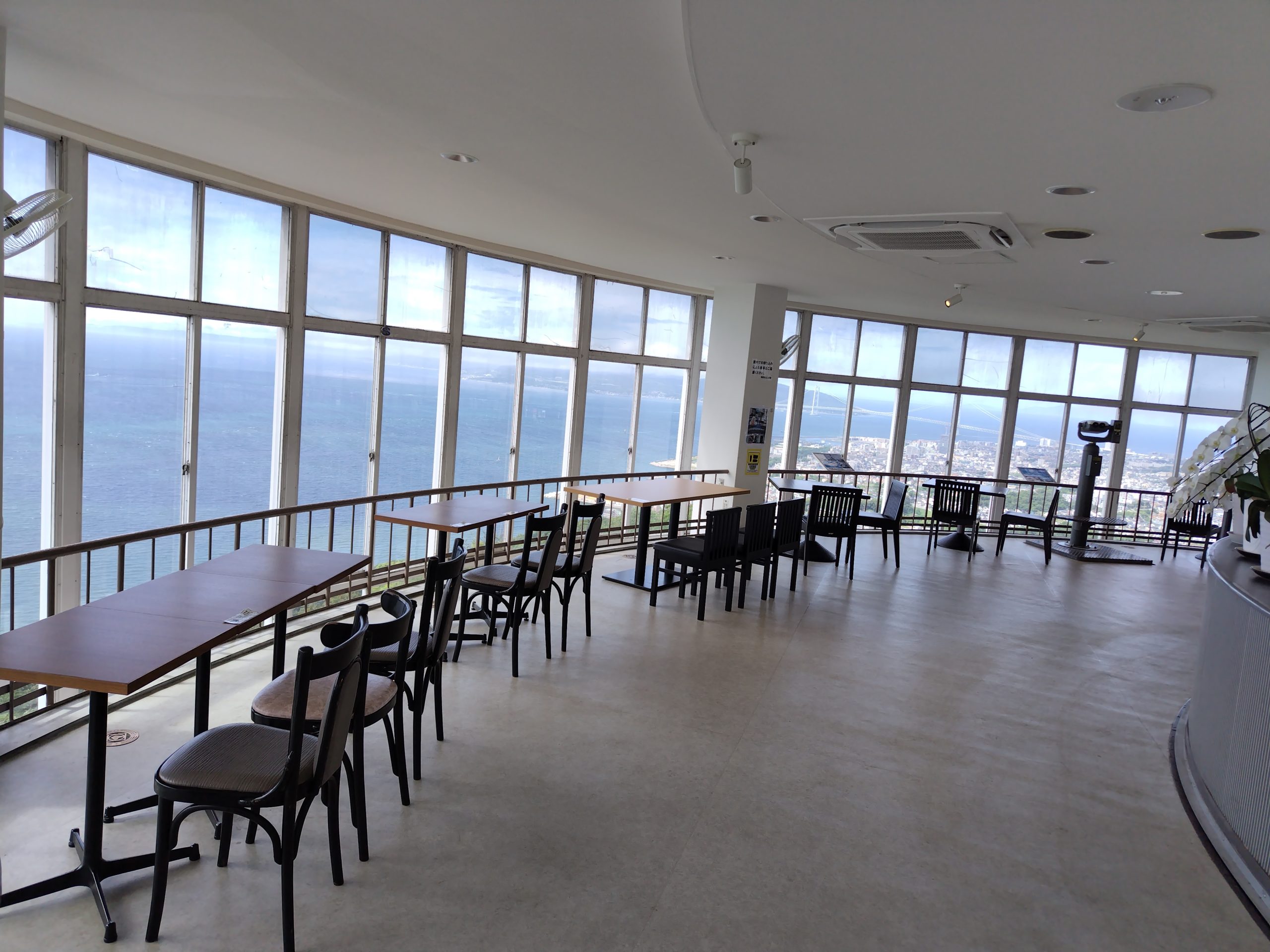
One of Kobe’s stunning scenic spots that doesn’t get overly crowded, even on weekends, is the Spinning Observation Deck at Sumaura Sanjo Yuen (Sumaura Hilltop Amusement Park).
More than just the view from the observation deck, the building itself—which opened in 1958 (Showa 33)—the arcade games installed inside, and the background music all create a fantastic retro atmosphere. I highly recommend everyone visit this spot!
As for how to get there, if you use public transport, the best way is to get off at Sumaura Koen Station on the Sanyo Electric Railway Line. It’s a quiet station that has a slightly nostalgic, low-key feel.
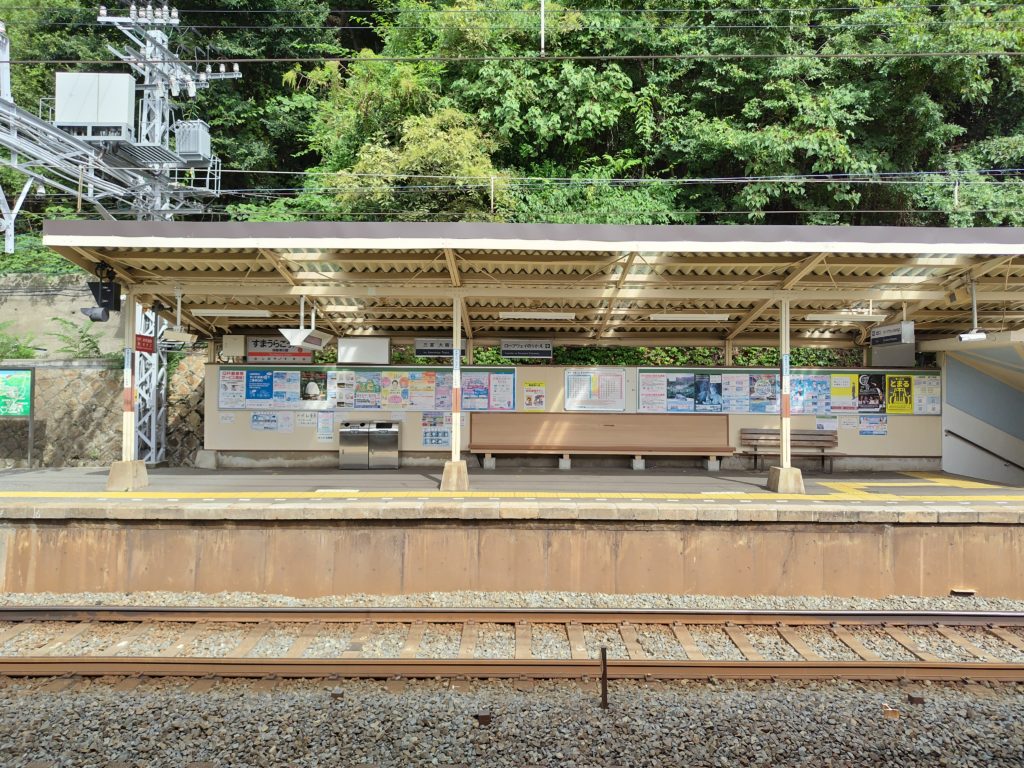
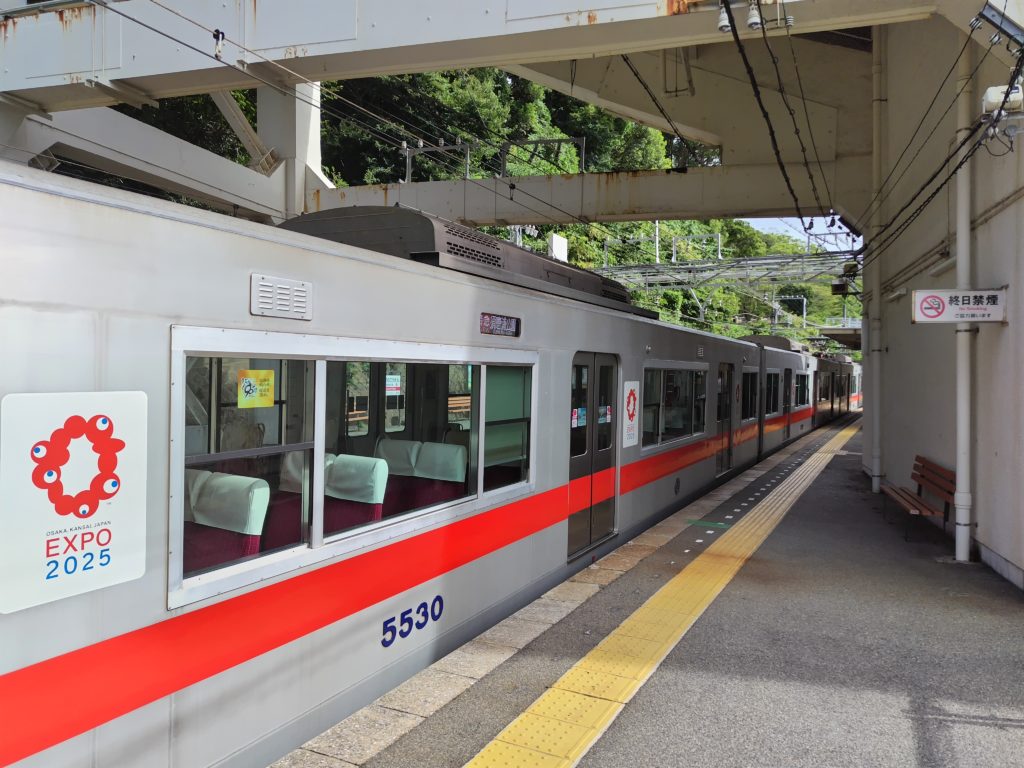
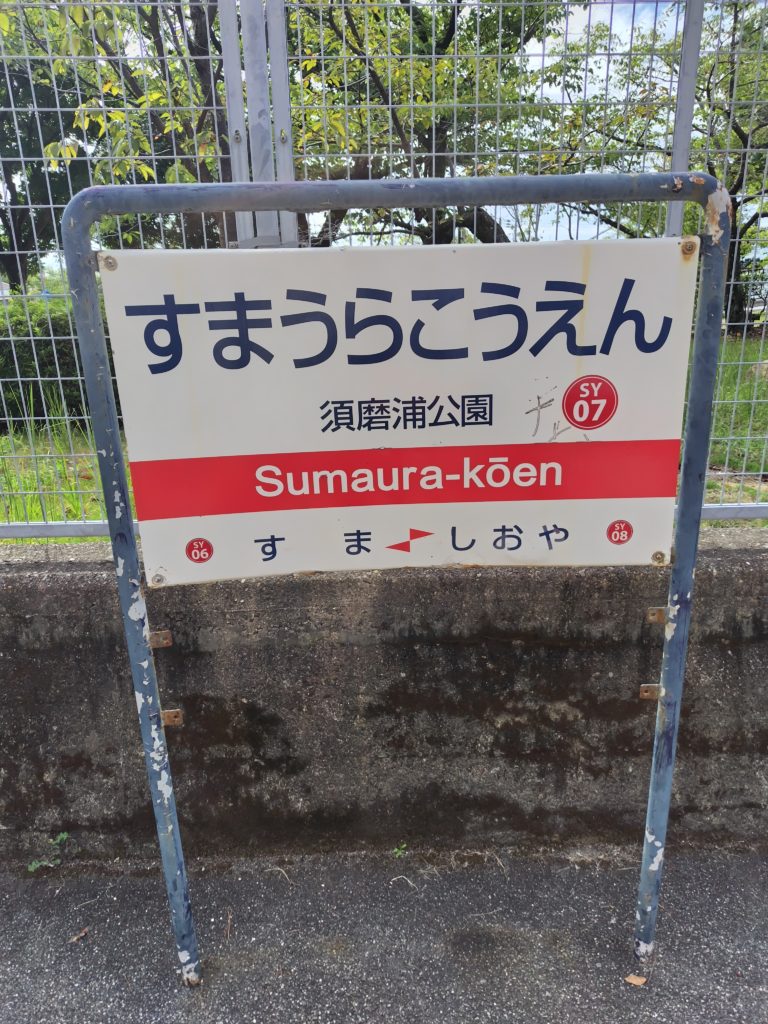
Right outside the station, the ropeway boarding area is immediately to your right.
This time, I decided to push myself a little and hike up on foot. I don’t think it’s a very difficult climb, but I recommend taking the ropeway if you’re not confident in your stamina. The total cost for the ropeway and the Car Lator (a unique escalator-like vehicle you switch to mid-way) appears to be ¥1,500.
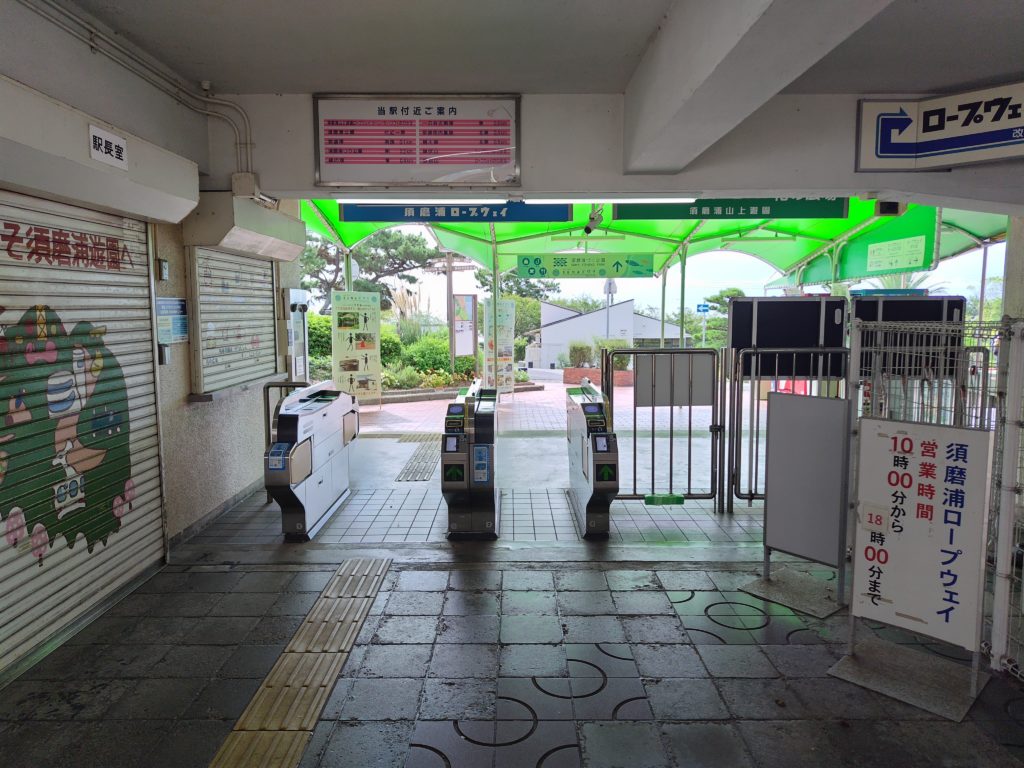
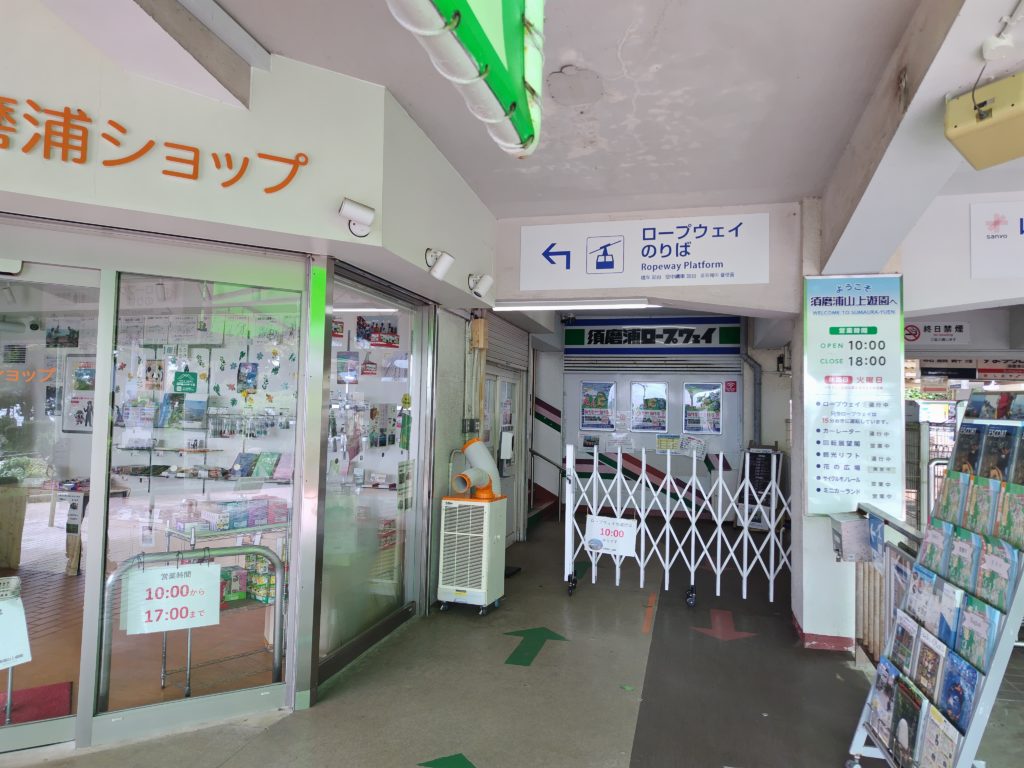
After exiting the ticket gate, the hiking trail is to your right.
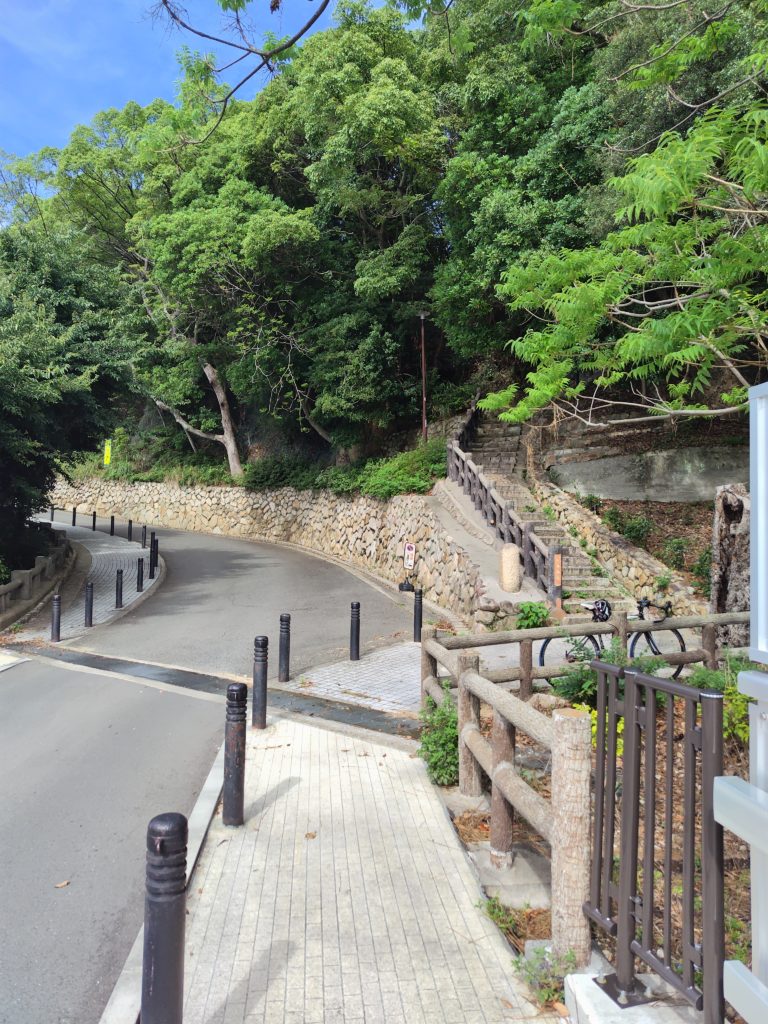
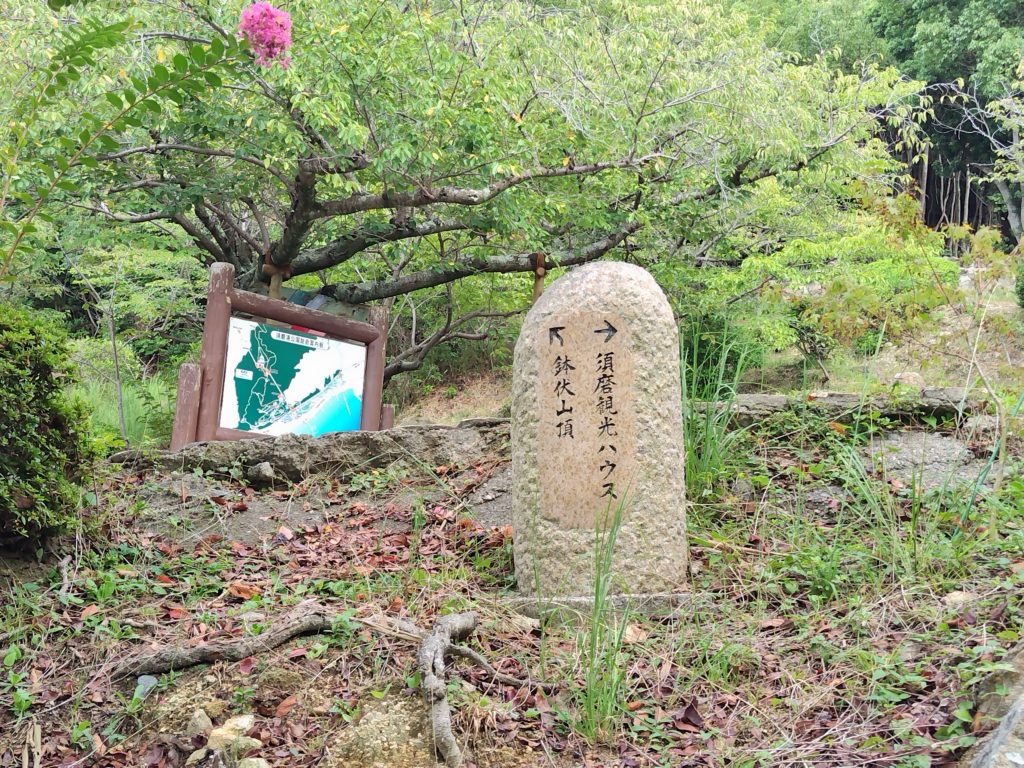
In the photo on the bottom left, taking the stairs on the right is a shortcut, so I went up that way. After climbing for a short time, you come out to a small, open area. Here, you’ll reach a fork in the road, and you need to take the path heading toward the peak of Hachibuseyama.
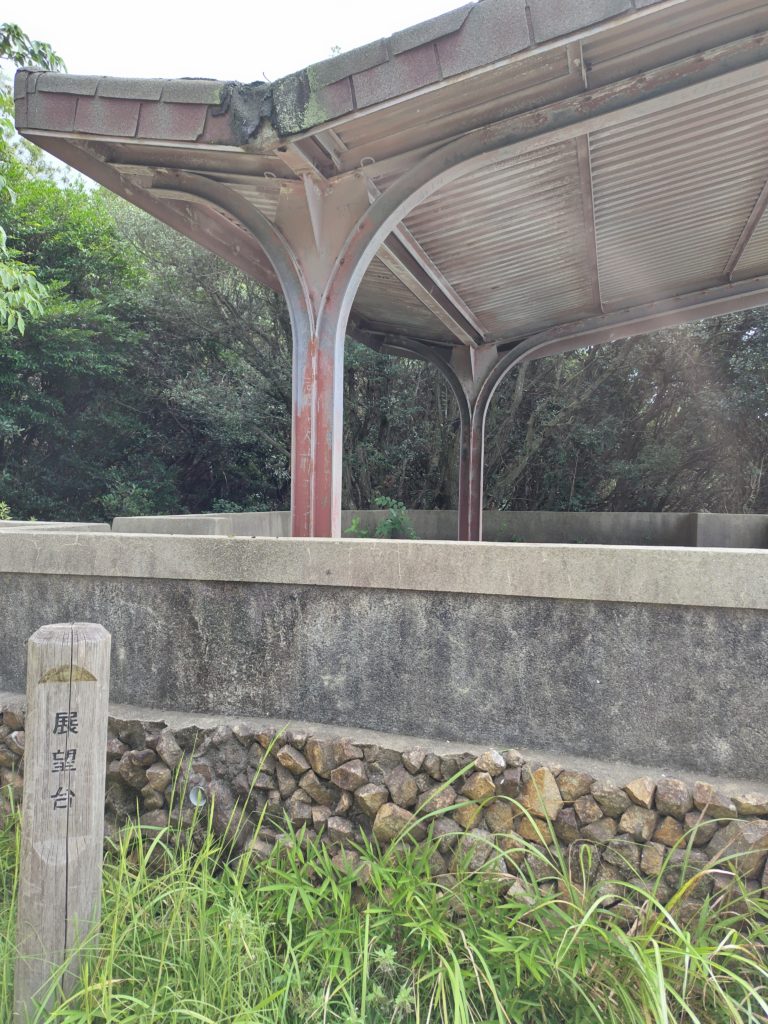
It had been a while since I’d hiked, and once I started walking, the trail felt quite steep—it was tougher than I expected. As I took breaks and continued climbing, I came across a small observation deck along the way, and the view from there was already magnificent.

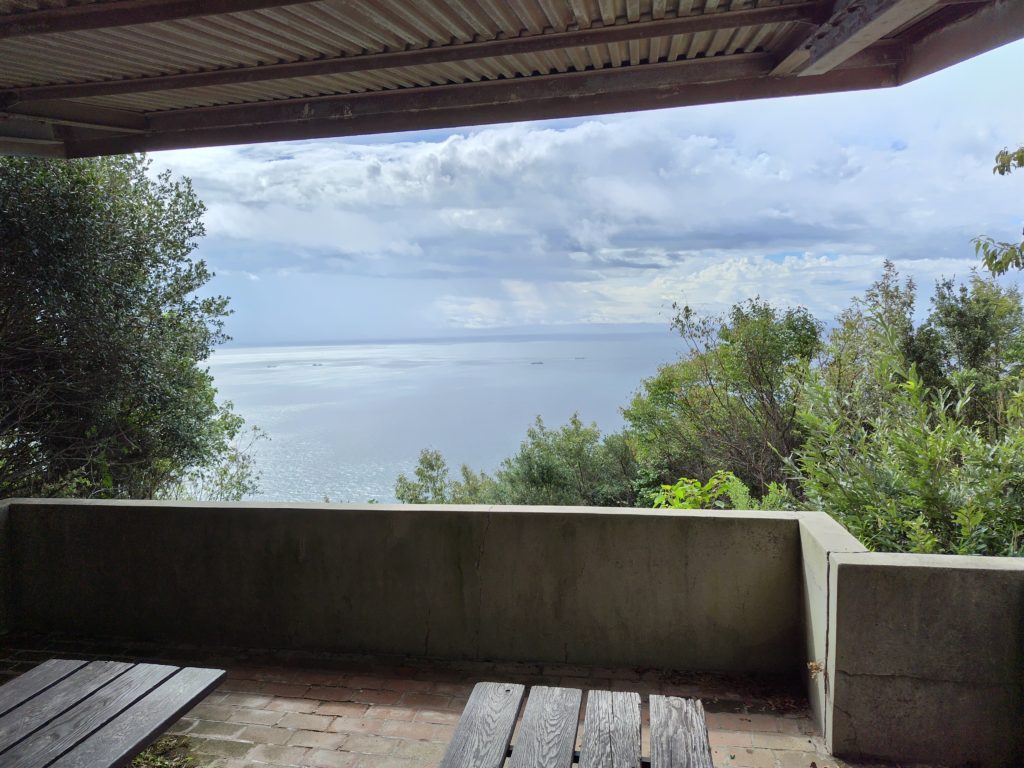
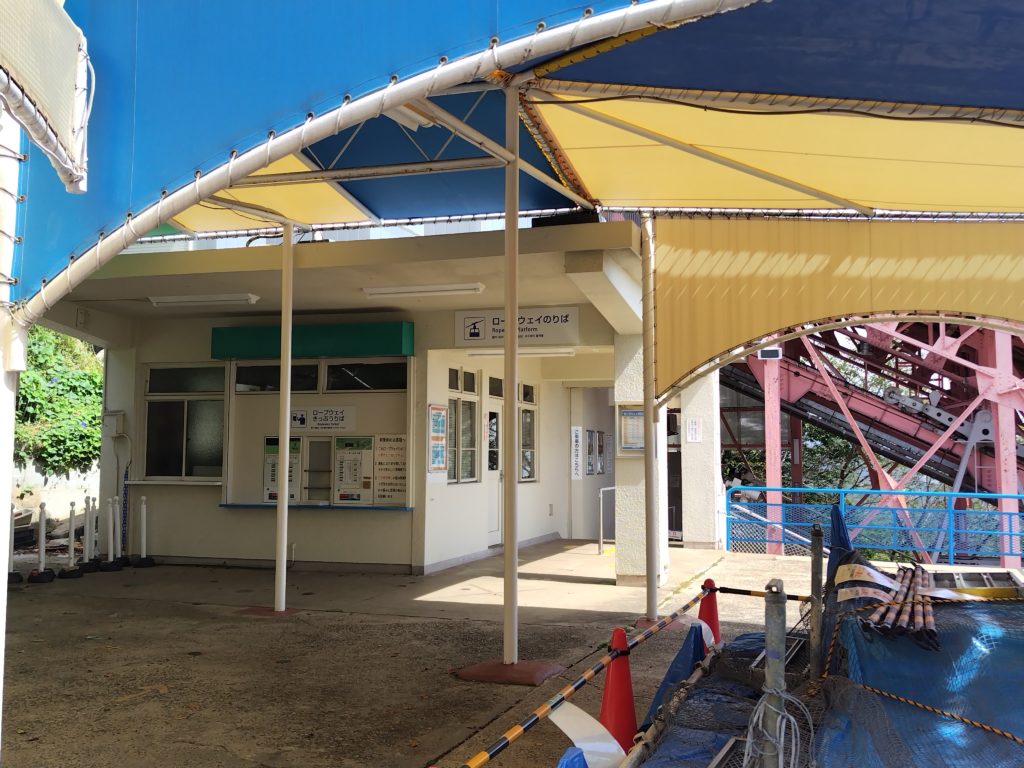
Climbing further, you reach the Ropeway Station, where people coming up by ropeway need to get off. This is where you switch to a unique vehicle called the Car Lator. Be prepared for a surprise, as it offers quite a bumpy and rattling ride! Since I came on foot this time, I continued past it. Right next to this ropeway platform, there’s a smaller observation deck where you can take a rest. Once you’ve reached this point, the summit’s spinning observation deck is just a little bit further.

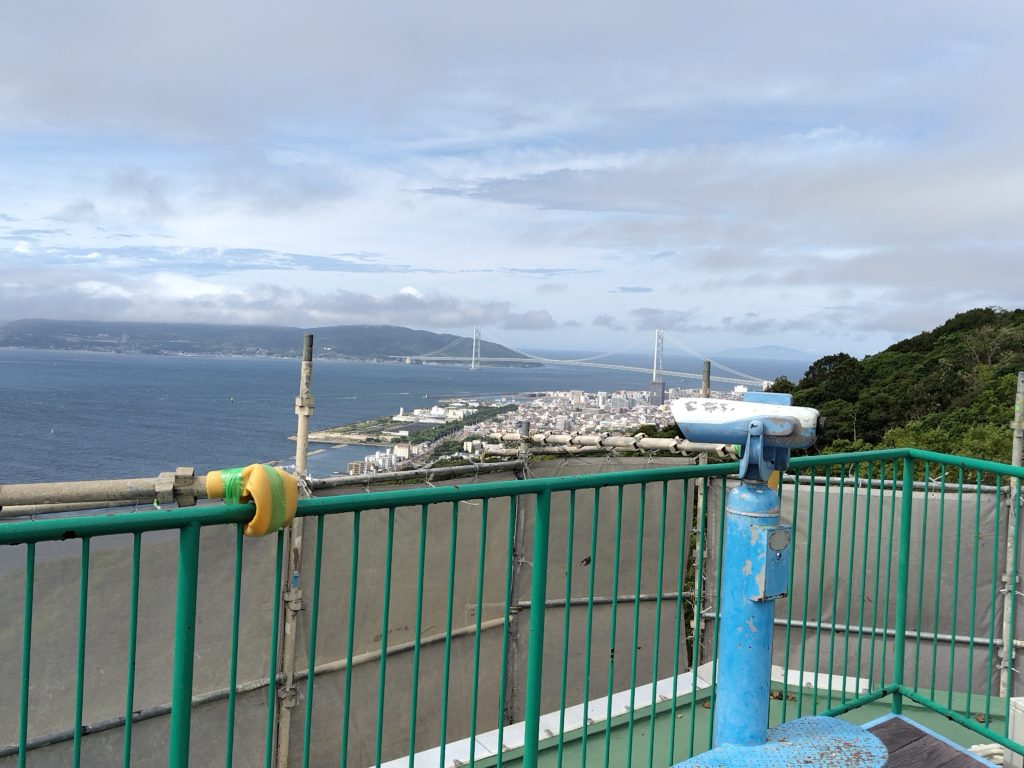
Climbing a little further, you finally reach the observation deck. By this point, I was quite sweaty!
I could hear a retro-sounding song playing from the speakers. I tried searching on Google, but nothing came up—it must be a lesser-known, minor track. The departure/arrival point for the Car Lator is right beside the observatory.
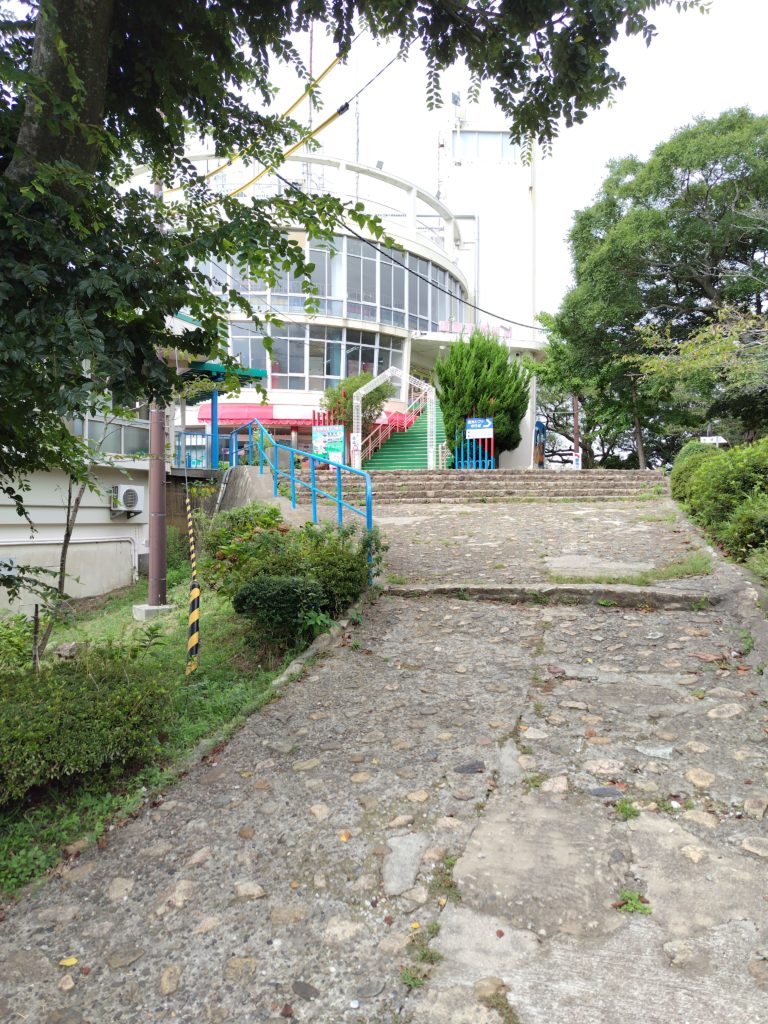
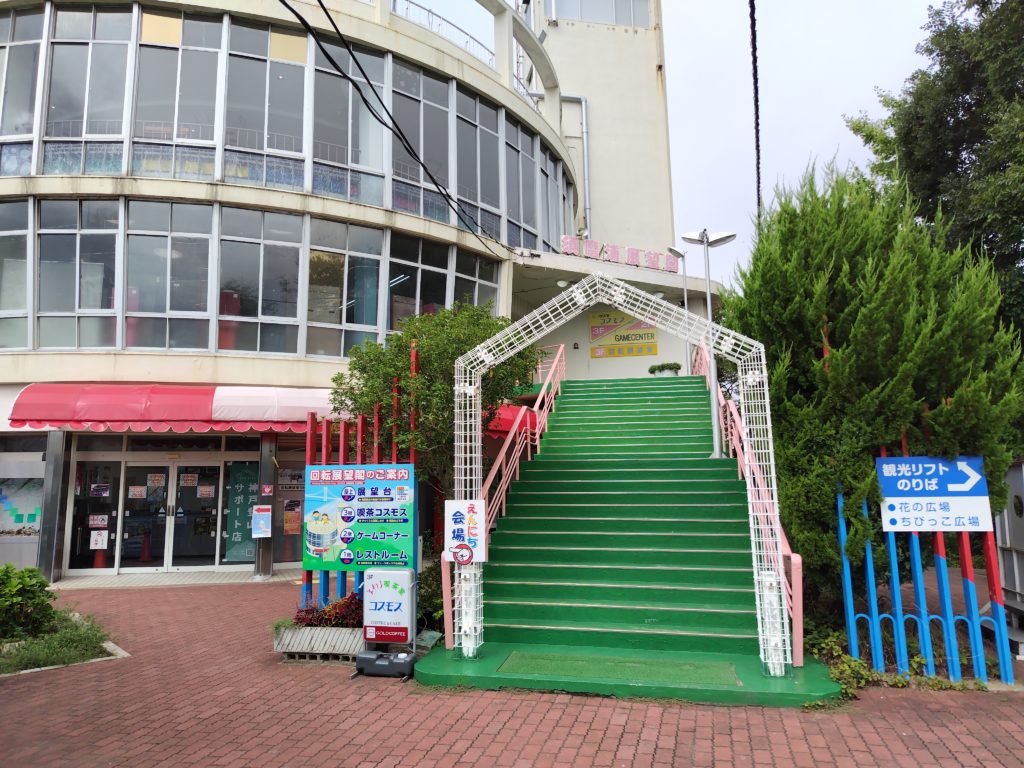
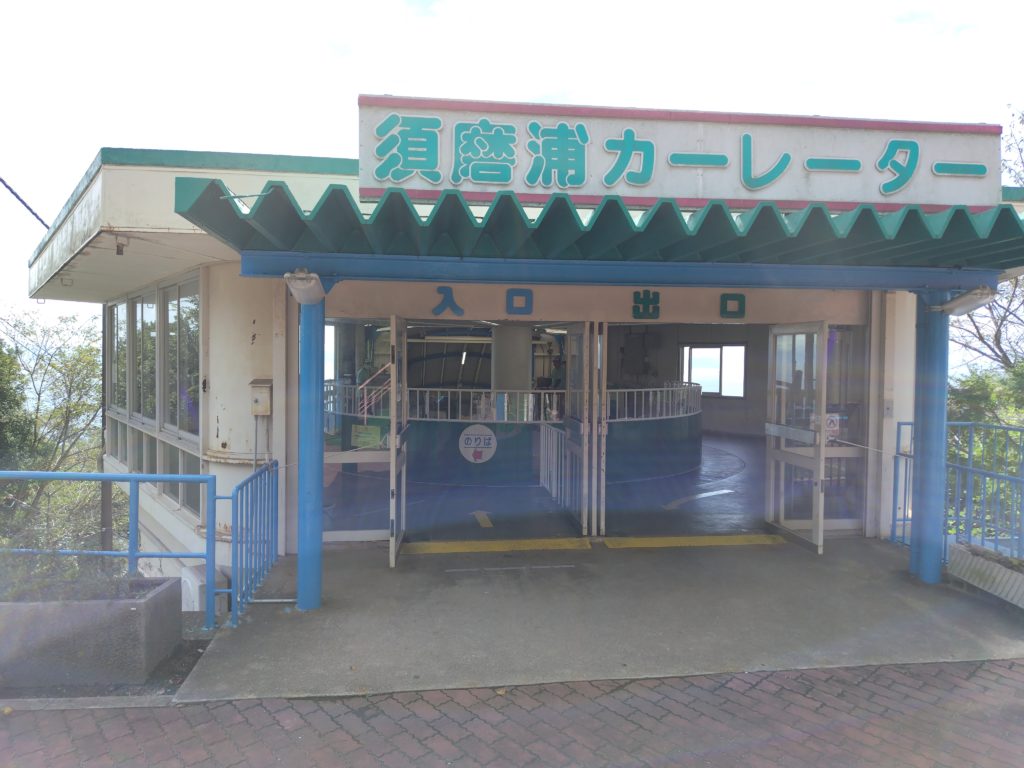
The first floor was set up as a kind of hiking support reception area.
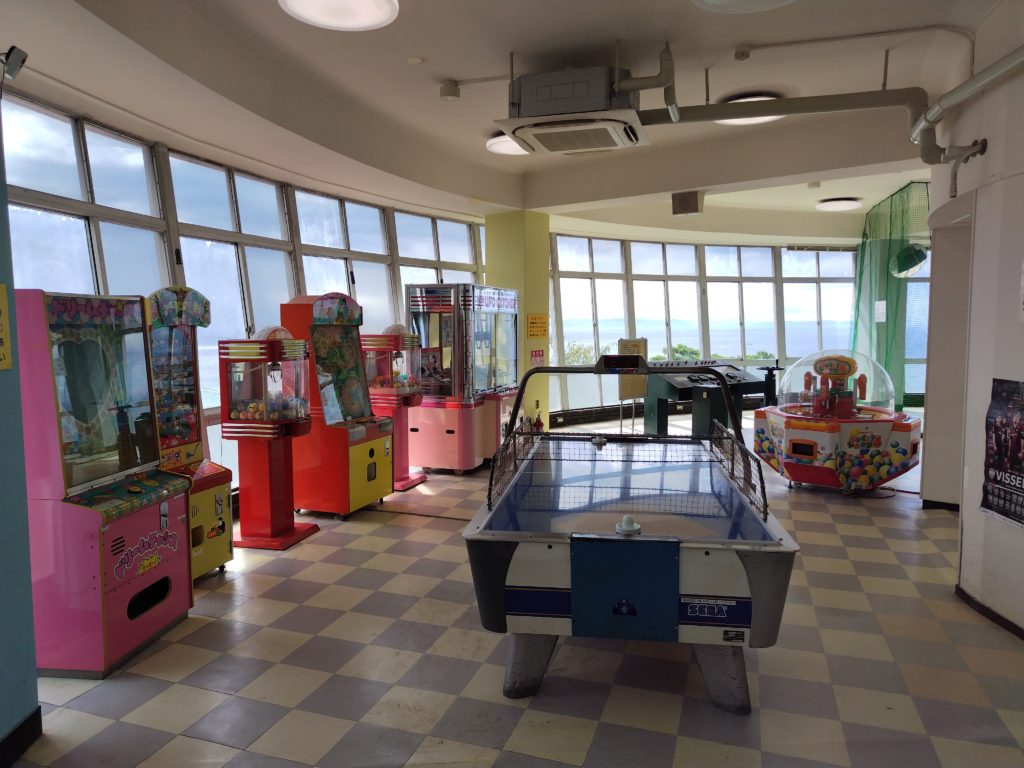
When you go up the stairs and enter the second floor, you find a game corner filled with retro arcade games. The air conditioning was working great—it was a real lifesaver!
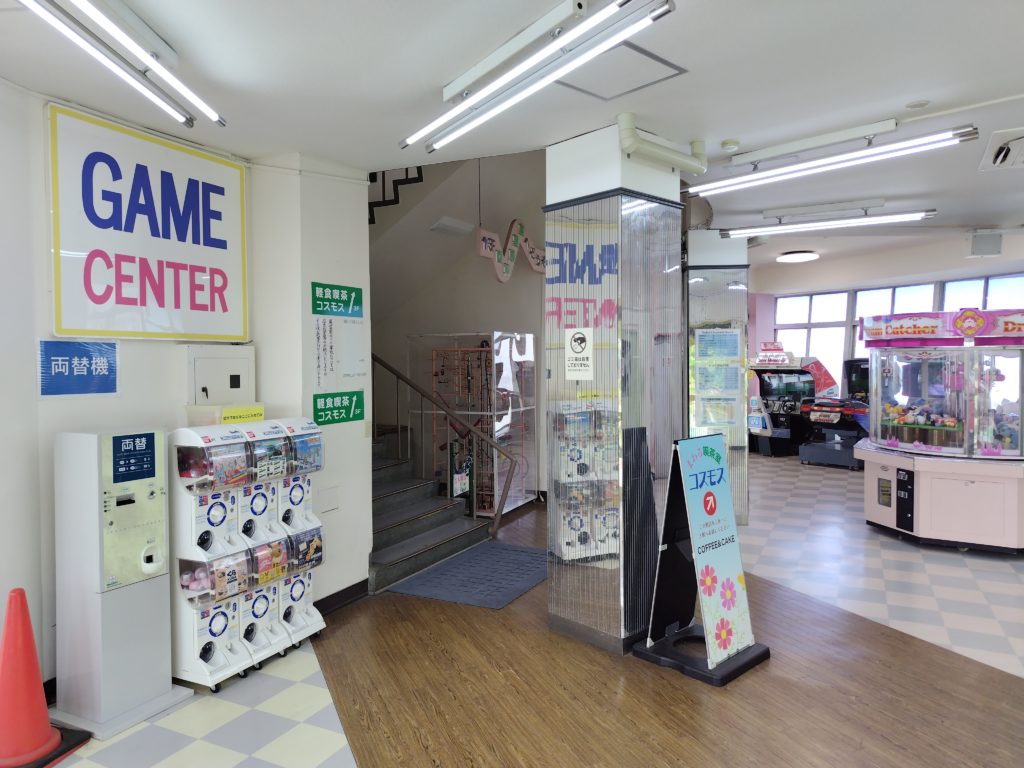
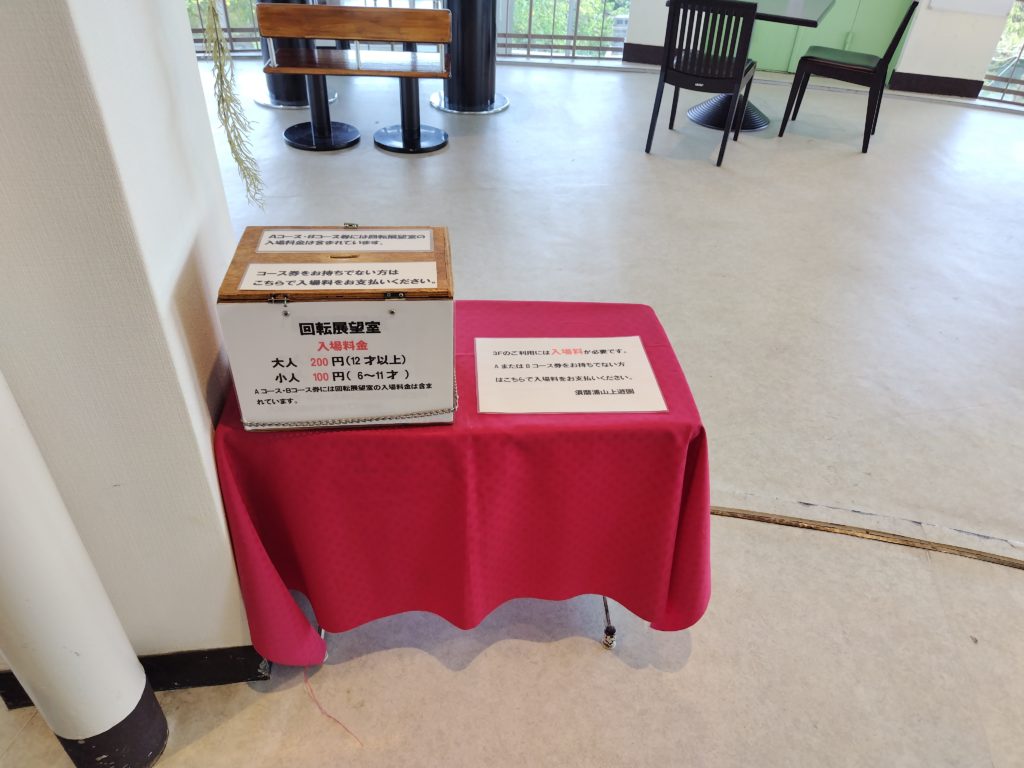
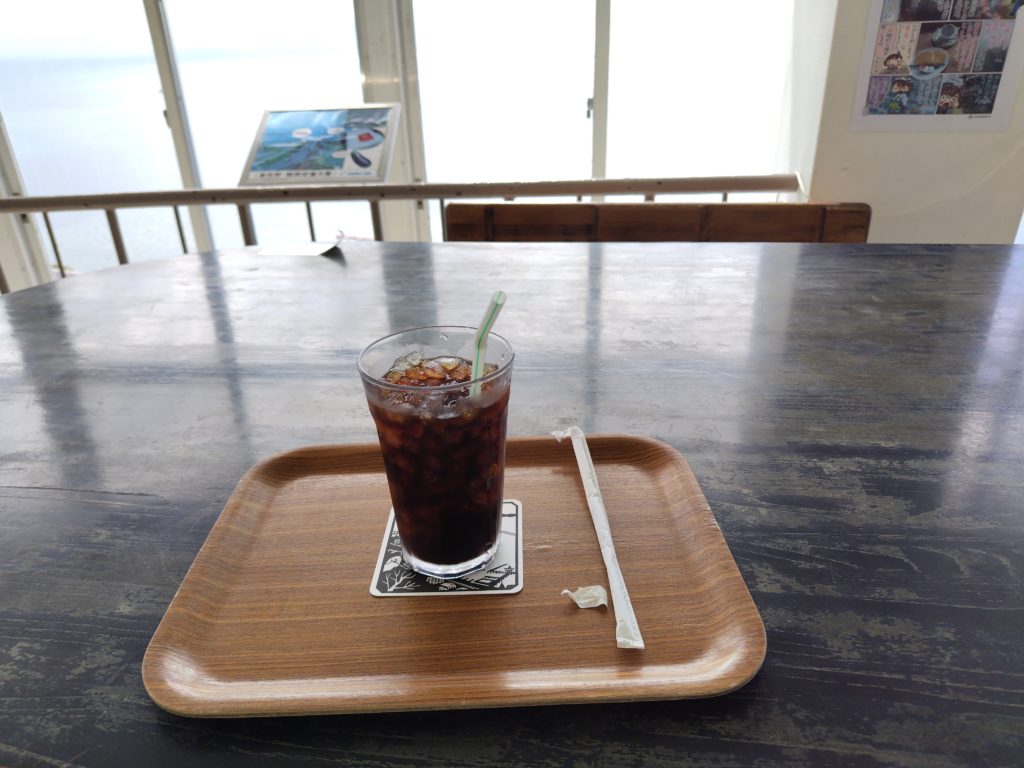
After climbing the stairs to the third floor, I found a small box where you drop the entrance fee—200 yen for adults and 100 yen for children. This time, I also treated myself to an iced coffee for 600 yen. It was a weekend morning, and when I arrived, the place was almost empty. I sat down and slowly enjoyed my coffee. As time passed, a few more visitors trickled in.

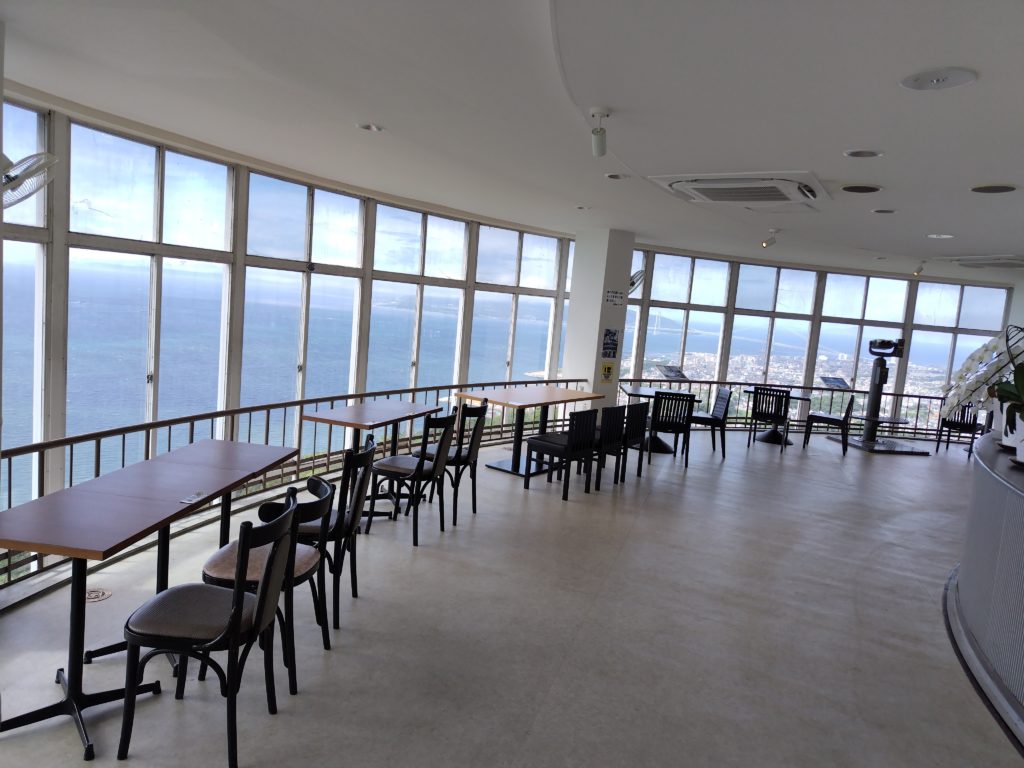
The iced coffee tasted just like something poured straight from a store-bought bottle—but after sweating my way up here, it felt absolutely refreshing. And the view? Absolutely spectacular. You can feel the slow rotation of the observation deck; I thought it might take about an hour to complete a full turn, but according to an article in the Kobe Shimbun, it actually takes 45 minutes.
On one of the pillars, there’s a comic by Saeko Hoshii depicting her visit to this rotating observatory. She even describes the shockingly bumpy ride of the Carlator—definitely worth a read if you’re into quirky travel experiences.

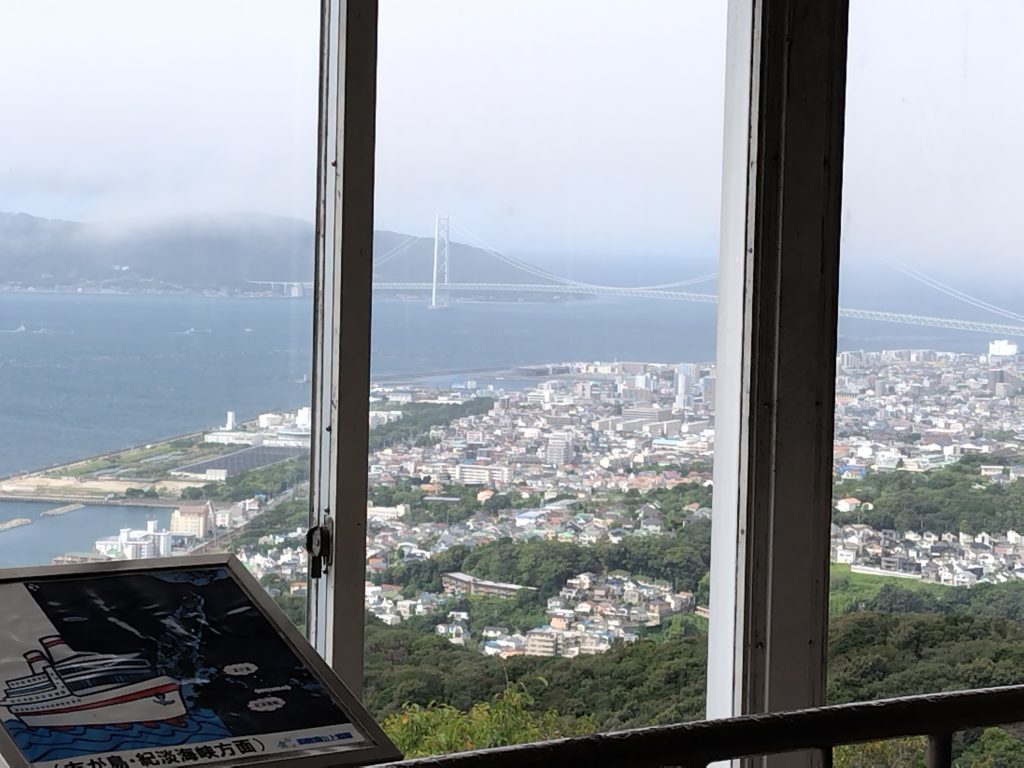
It was a quiet and relaxing place, perfect for taking in the scenery at a leisurely pace. Inside the building, retro music was playing softly, creating a nostalgic atmosphere that made me feel as if I had stepped back in time.
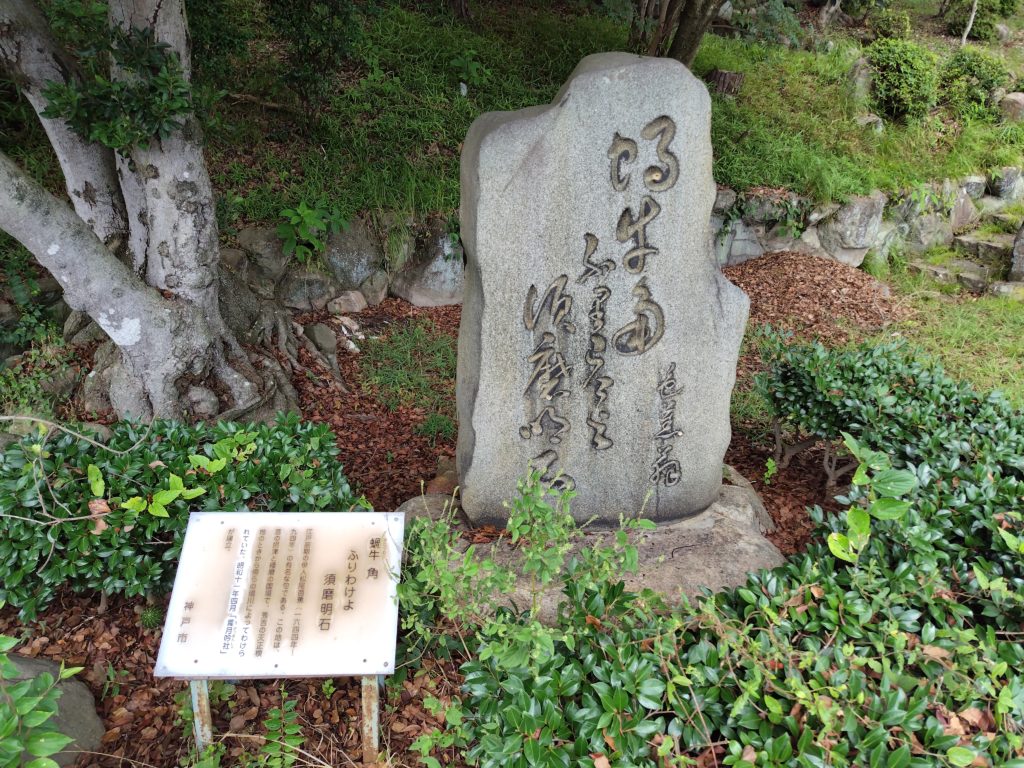
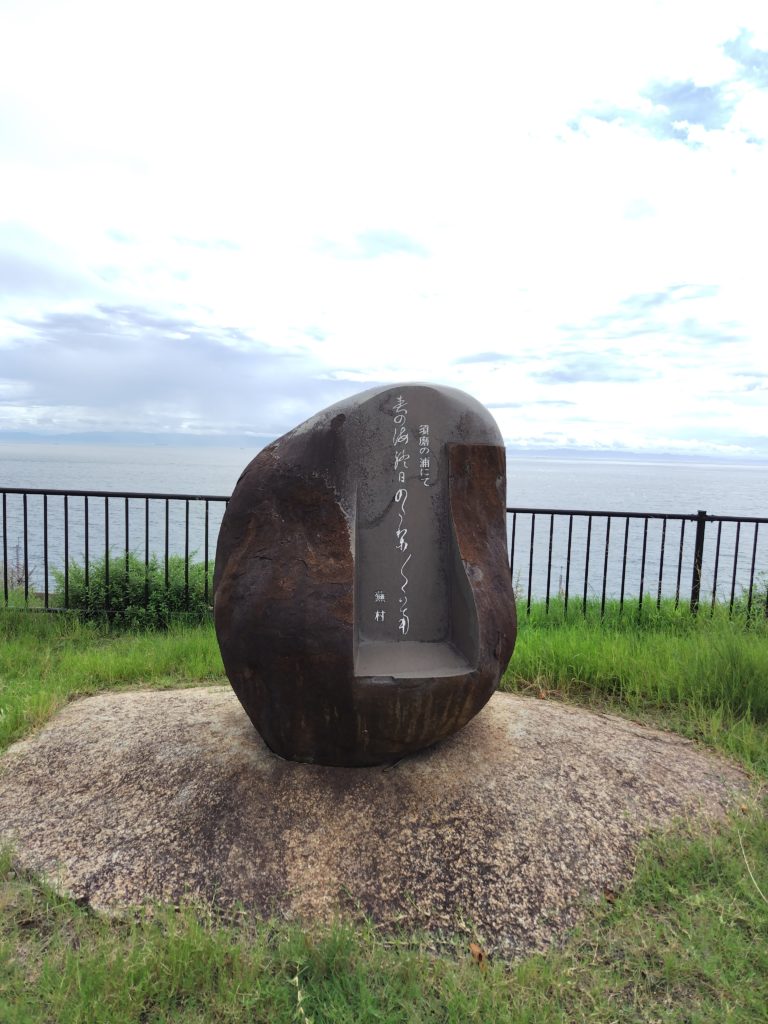
On the way back, I seemed to have taken a different route and ended up descending into an area a bit farther from the station. As I walked toward the station, I came across two stone monuments inscribed with haiku by Matsuo Bashō:
“Snail—
O, divide your horns
Between Suma and Akashi.”
“Spring sea—
All day long
The waves rise and fall.”
Finding these poems along the path added a poetic touch to the journey home.
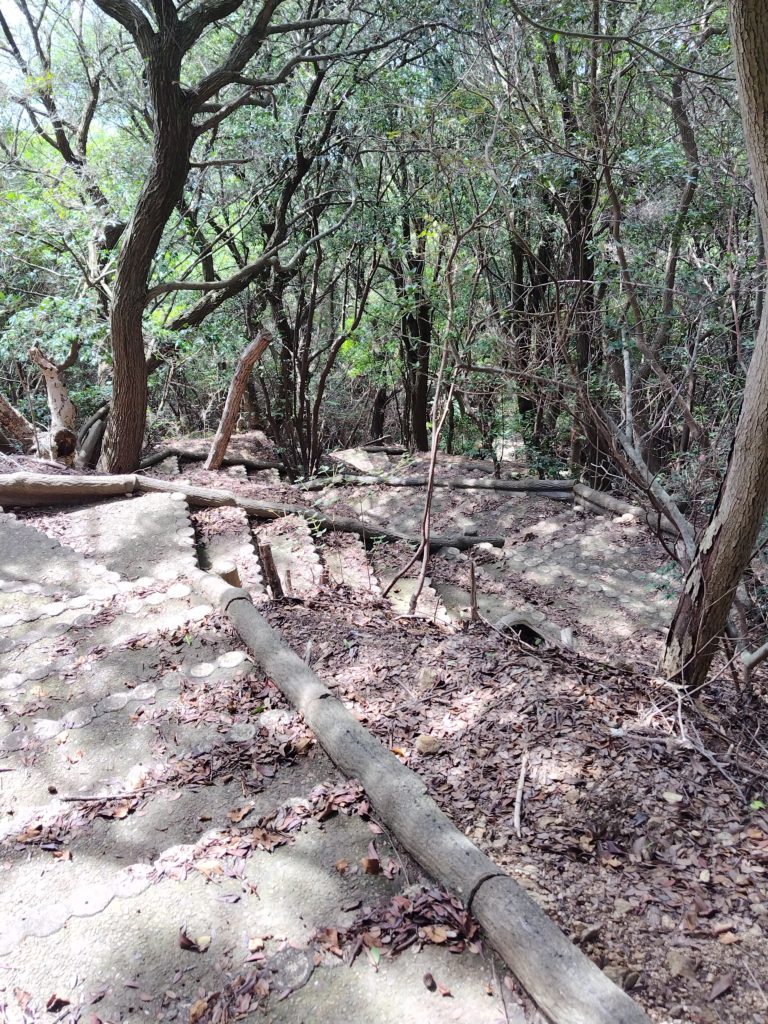
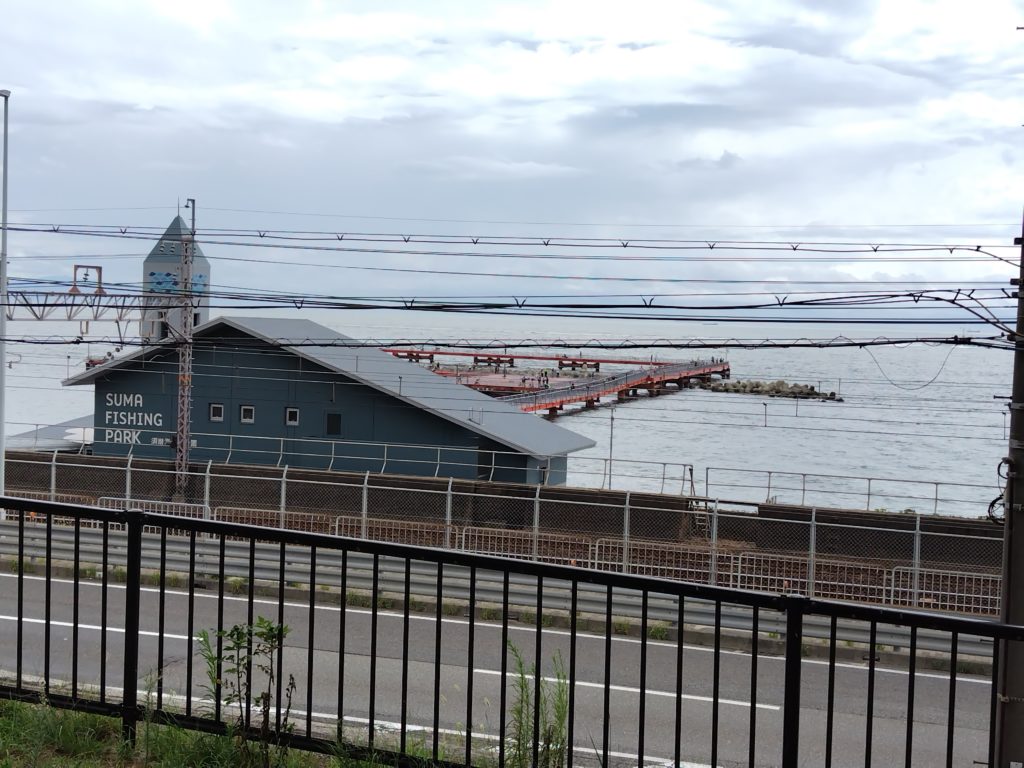
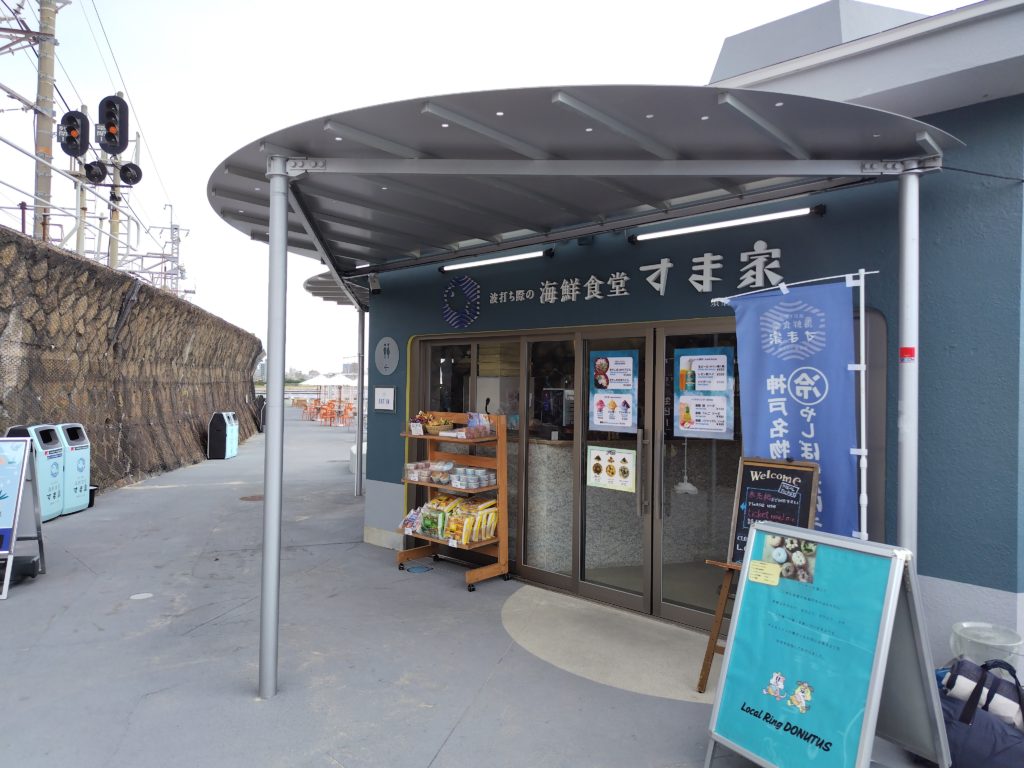
I finally made it back to the station—pretty exhausted by this point. I noticed something this time: the seaside fishing park just near the station, which had been closed due to typhoon damage, has reopened. There’s also a small restaurant there serving seafood rice bowls and other dishes.
Most of the menu items are priced close to 2,000 yen, which felt a bit on the expensive side.
One thing to be cautious about—I saw quite a few hornets along the way. I wish I had brought some insect repellent with me. It was still pretty warm, so it might be better to visit when the weather is cooler and there are fewer bugs.
That said, the ocean view really does have a way of refreshing the soul. I’d love to come back again someday.


コメント